What the anion gap Evaluates
The anion gap is a computed value that supports clinicians judge metabolic acidosis and related changes in electrolytes. It indicates the difference between commonly measured cations and anions in the blood, mainly using the electrolyte panel. In practice, the anion gap is a useful shortcut for spotting whether unmeasured acids may be increasing in the body.
An anion gap calculator streamlines this process by converting the available lab values into a single number that aids diagnostic interpretation. Because the calculation depends on measured ions rather than direct acid detection, it functions as a marker of acid-base balance rather than a diagnosis by itself.
Most often, the anion gap is used to help differentiate high anion gap metabolic acidosis from normal anion gap metabolic acidosis. A high value may indicate the presence of organic acids such as lactate or ketones, while a normal value may suggest bicarbonate loss or impaired renal handling of acid. The result should always be interpreted with the full clinical context and not as an isolated finding.
How to Operate an Anion Gap Calculator
An anion gap calculator typically requires three values: serum sodium, serum chloride, and serum bicarbonate. These measurements are taken from standard serum electrolytes testing. After inputting the values, the calculator uses the standard calculation formula:
Anion gap = serum sodium - (serum chloride + serum bicarbonate)Certain calculators also consider potassium, but the most widely used clinical version excludes it. The reason this formula works is that measured sodium represents cation, while chloride and bicarbonate are the primary measured anions. The gap reflects unmeasured ions, including albumin and other negatively charged proteins, organic acids, and various solutes.
To use the calculator correctly, ensure the lab values are from the same draw if possible. Differences in timing can affect the result, especially if the patient has a changing acid-base status. A single number should be read in combination with symptoms, medication use, renal function, and other laboratory findings.
What Makes Albumin Affects the Anion Gap
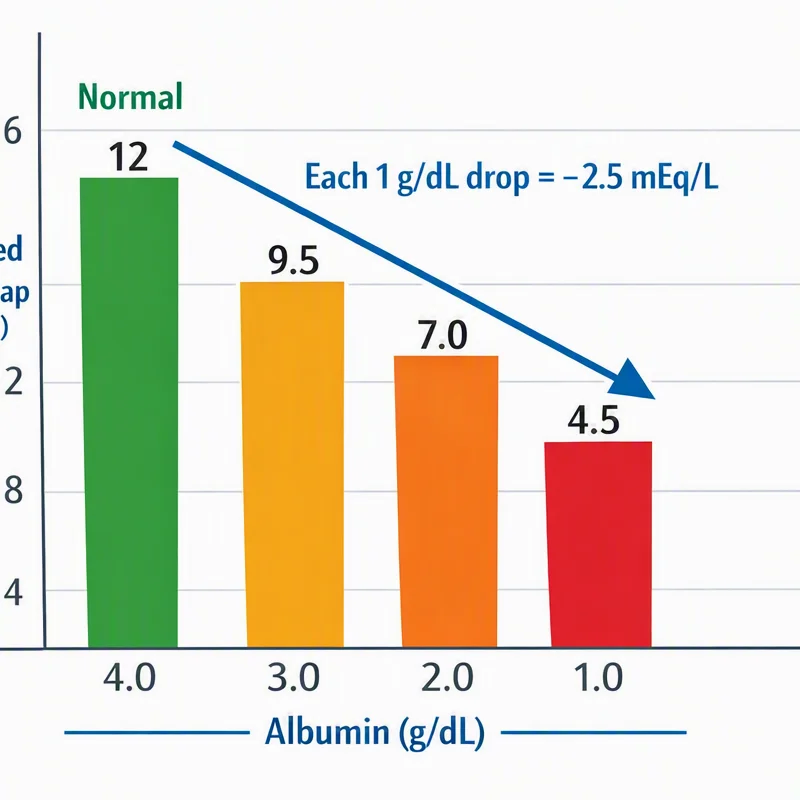
Albumin is one of the key unmeasured anions in blood. As it carries a negative charge, it contributes significantly to the anion gap. When serum albumin is low, the calculated anion gap can appear misleadingly normal or slightly elevated, even when a real acid-base problem exists.
This is why hypoalbuminemia matters so much in clinical interpretation. If a patient has low albumin, the body has reduced negatively charged proteins to help form the gap. That reduction can obscure metabolic acidosis, especially in severely ill patients where the acid burden may be significant.
The effect is tied to protein charge. As albumin falls, the body may respond with more chloride or other shifts in serum electrolytes to preserve electroneutrality. The result is a lower apparent gap, even if unmeasured acids are present. This is the reason albumin correction is often necessary for more accurate assessment.
Corrected Albumin Gap Formula
The albumin-based corrected anion gap modifies the initial anion gap to account for low blood albumin. A standard correction formula is:
Corrected anion gap = measured anion gap + 2.5 × (4.0 - albumin in g/dL)In this calculation, typical albumin is typically considered 4.0 g/dL. For each 1 g/dL decrease below typical, the anion gap is increased by about 2.5 mEq/L. This correction factor approximates the contribution of albumin to the result and helps uncover a hidden high anion gap.
For example, if the measured gap is 10 and albumin is 2.0 g/dL, the corrected value becomes 10 + 2.5 × 2 = 15. That may shift the result from a seemingly expected range into a more worrisome one. This is why albumin correction can change both diagnosis and treatment decisions.
Many tools combine the basic calculator with corrected albumin adjustment so the clinician can see both the original and adjusted values. That dual view boosts clinical value, especially when the patient has low albumin from illness, inflammation, or poor nutrition.
Interpreting Normal, High, and Low Anion Gap Values
A normal anion gap is usually interpreted using the lab’s reference range, which can change by method and institution. In broad terms, a normal result suggests that the balance between measured cations and anions is well balanced. However, a normal value does not automatically rule out acid-base disorder, especially if albumin is low or if there are mixed disturbances.
A high anion gap metabolic acidosis suggests accumulation of unmeasured acids. This pattern is often tied to lactate, ketones, and retained acids in kidney dysfunction. It often calls for further testing for the underlying cause.
A low anion gap is less common and is often overlooked. It may occur when albumin is low, when there is excess positively charged protein, or when there is an analytical problem. Although a low value is not always dangerous, it should not be ignored because it can reveal important underlying disease or error.
Frequent Reasons of Increased Anion Gap
One of the leading reasons of an elevated anion gap is lactic acidosis. In this state, lactate piles up when oxygen transport or use is compromised. Sepsis, shock, profound poor perfusion, and certain medications can all play a role. Because lactate is an unmeasured anion, the gap increases as its concentration increases.
Ketoacidosis is another classic cause. In diabetic ketoacidosis, starvation ketosis, or alcoholic ketoacidosis, ketones accumulate and raise the gap. In these cases, the acid burden may be significant even before the bicarbonate level declines dramatically.
Renal insufficiency can also result in elevated values because the kidneys cannot remove acids normally. With worsening declining renal function, acids accumulate and bicarbonate may fall. This is one reason the anion gap is often reviewed alongside creatinine, blood urea nitrogen, and the overall metabolic profile.
Additional causes may include toxins, medications, and mixed disorders. Still, lactic acidosis, ketoacidosis, and renal failure remain among the most significant explanations for a high result.
Frequent Sources of a Reduced Anion Gap
The first thing to consider is lab error. A slight error in sodium, chloride, or bicarbonate measurement can greatly affect the calculated value. If the result seems inconsistent with the clinical picture, repeating the test is often a useful first step.
Hypoalbuminemia is among the most frequent true reasons of a low anion gap. Because albumin is a major unmeasured anion, a low level reduces the apparent gap. This makes albumin correction very important when reviewing an electrolyte panel in hospitalized or chronically ill patients.
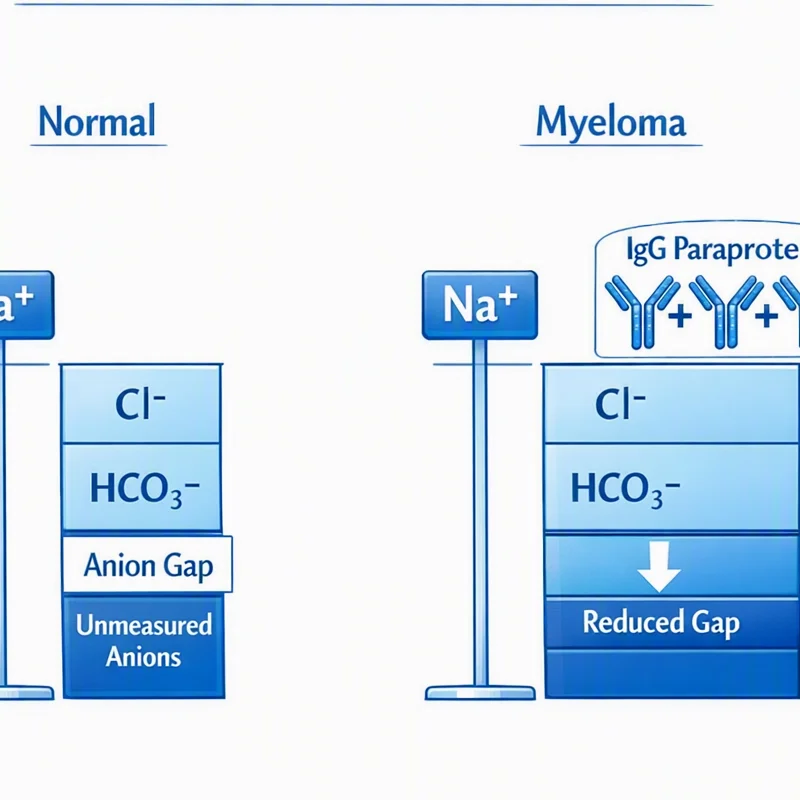
Paraproteinemia can also reduce the gap. In conditions with excess positively charged proteins, such as some monoclonal gammopathies, the measured balance changes. The body may seem to have fewer unmeasured anions because the abnormal proteins change the electrical distribution. A low gap in this context can be a clue that warrants additional workup.
Less commonly, certain medications or analytical interferences can contribute. However, in routine practice, lab error, hypoalbuminemia, and paraproteinemia are the main considerations.
When to Consider Albumin Correction in Clinical Practice
Albumin correction is especially useful in critical care, where patients often have complicated acid-base disorder patterns and low serum albumin. In this setting, relying on the uncorrected number alone can fail to detect a meaningful elevation in the gap. That matters because treatment may depend on identifying the true source of acidosis.
It is also valuable when a patient has sepsis, malnutrition, liver disease, nephrotic syndrome, or fluid overload, all of which may reduce albumin. In these cases, the corrected result provides improved clinical interpretation than the raw number. It can also help distinguish a truly normal gap from a masked high gap state.
As a practical rule, if albumin is below normal and the clinical concern is unexplained acidosis, correction should be carefully considered. The calculator becomes more valuable when it is used as part of a more complete assessment rather than as a standalone metric.
Limitations of the Anion Gap Calculator
Even a carefully built anion gap calculator has limits. The biggest is the dependence on the lab’s reference range and analyzer method. Different measurement platforms can yield different baseline values, so what looks abnormal in one system may be acceptable in another.
Measurement error can also affect the result. Small inaccuracies in serum sodium, serum chloride, or serum bicarbonate can shift the calculation noticeably. In addition, not all causes of acidosis create a high gap, and mixed disorders can blur the pattern.
Clinical context remains essential. A normal or corrected value does not exclude illness, and a high value does not identify the cause by itself. The result should always be interpreted with symptoms, vital signs, kidney function, lactate, ketones, medication exposure, and overall clinical interpretation. The calculator is best viewed as a decision-support tool, not a replacement for judgment.
FAQ About the Anion Gap Calculator
What does an anion gap calculator used for?
An anion gap calculator helps to https://anion-gap-test918.evergrovio.com/posts/how-to-use-an-anion-gap-calculator-for-electrolyte-disturbance estimate the anion gap from basic lab values and help evaluate metabolic acidosis. It is especially useful for identifying high anion gap metabolic acidosis and for supporting clinical interpretation of an abnormal electrolyte panel.
How can you adjust the anion gap for albumin?
Albumin correction is usually done by adding about 2.5 mEq/L to the measured anion gap for each 1 g/dL of albumin below normal albumin of 4.0 g/dL. This produces an albumin-corrected anion gap that more accurately shows the true acid-base status when hypoalbuminemia is present.
Why can low albumin affect the anion gap?
Serum albumin carries negative protein charge and makes a major contribution to the gap. When albumin is low, fewer unmeasured anions are present, so the measured value may fall even if the patient still has an underlying acid burden. This can make the gap look less abnormal than it really is.
What can a high anion gap mean?
A high result often indicates metabolic acidosis from unmeasured acids such as lactate or ketones. Common causes include lactic acidosis, ketoacidosis, and renal failure. The exact meaning depends on the patient’s history, other labs, and overall clinical context.
Can metabolic acidosis still occur with metabolic acidosis?
Yes. A normal anion gap can still occur with normal anion gap metabolic acidosis, such as bicarbonate loss states. It can also appear normal when hypoalbuminemia masks a true elevation, which is why albumin correction is important for accurate anion gap interpretation.