What Is the Anion Gap?
The anion gap is a computed value that helps clinicians read acid-base disorders on standard lab work. It is derived from the connection between major electrolytes in the blood, notably sodium and chloride, along with bicarbonate. Because some charged particles are not directly measured, the anion gap can act as a clue to hidden shifts in the body’s chemistry.
At its core, the anion gap shows the difference between measured positively charged particles and measured negatively charged particles. When that gap is elevated than expected, it can indicate that extra acids or other unmeasured anions are present. That makes it a valuable diagnostic clue in cases of metabolic acidosis and other acid-base disorder conditions.
In practice, the anion gap is reviewed alongside the rest of the serum electrolytes, the overall blood chemistry panel, and the patient’s symptoms. A single number is rarely enough on its own. The real value comes from clinical assessment, especially when kidney dysfunction may be affecting acid handling, chloride balance, and bicarbonate levels.
How an Anion Gap Calculator Operates
An anion gap calculator takes values from a serum chemistry panel or another lab report to determine the gap rapidly. In most cases, the calculation includes serum sodium, serum chloride, and bicarbonate. Because these numbers are commonly reported in the same panel, the calculator can assist a clinician or patient calculate anion gap without performing the math manually.
The calculator typically compares the measured cations and anions to infer the amount of unmeasured anions. If bicarbonate is low and chloride is not proportionally high, the gap may be elevated. If chloride rises as bicarbonate falls, the gap may remain normal. That distinction matters because it supports separate different forms of acid-base disturbance.
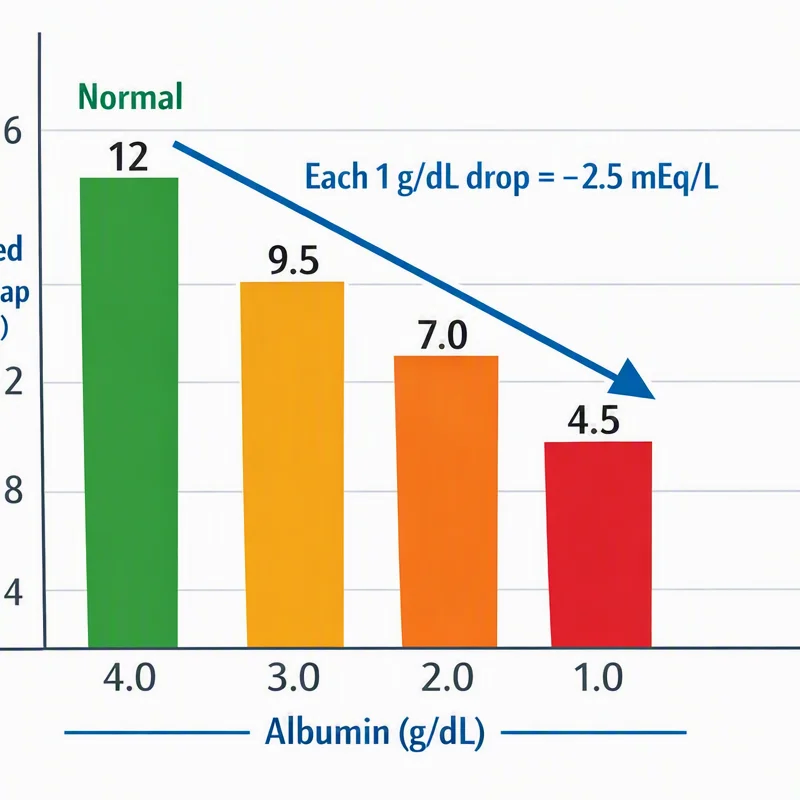
Some calculators also include albumin, which is important because albumin is a major unmeasured anion in blood. If albumin is low, the measured anion gap may look falsely normal or only mildly elevated. In those cases, users may need to correct for albumin to get a more accurate corrected anion gap.
A good calculator is not just a math tool; it aids clinical reasoning. It can reveal an elevated anion gap, a low bicarbonate pattern, or a possible acid-base mismatch. That makes it a helpful step in reviewing blood test results from an electrolyte panel or a broader metabolic workup.
Can Kidney Failure Raise the Anion Gap?
Absolutely, kidney failure can increase the anion gap. This occurs because damaged kidneys do not filter out acid and waste products effectively. As those substances build up, they can create an acid load that shows up as a higher gap on lab testing.
Both acute kidney injury and chronic kidney disease can cause this pattern. In acute kidney injury, the rise may be abrupt if kidney filtration drops suddenly and acid starts accumulating. In chronic kidney disease, the change may develop more gradually as renal function declines over time.
Uremia is a major reason the anion gap can rise in kidney failure. When kidney filtration worsens, waste product accumulation leads to retention of acids and other compounds that are not directly measured on a standard lab panel. This is one reason kidney failure is closely linked to metabolic acidosis and sometimes to high anion gap metabolic acidosis.
That said, kidney failure does not always produce a high gap. Some patients instead develop normal anion gap metabolic acidosis, especially earlier in the disease process or when specific tubular problems are present. So the calculator result should always be interpreted in context, not as a stand-alone diagnosis.
How
Kidneys help maintain acid base equilibrium by excreting acid and reabsorbing bicarbonate. When kidney function falls, the body is less able to remove acid, which can lead to acid buildup and metabolic acid accumulation. As this continues, that imbalance can lower bicarbonate and move blood chemistry toward acidosis.
Healthy kidneys continuously support renal removal of fixed acids generated by metabolism. In renal impairment, that excretion becomes more limited. The result is a rising acid load, which can affect the electrolyte values and increase the anion gap depending on which acids accumulate.
In plain language, the kidneys are supposed to act like a cleanup system. When that system slows down, acid stays in the body longer. That can disturb the pH of the blood and produce an acid-base disorder. A lower bicarbonate level on the blood chemistry panel is often one of the earliest laboratory signs.
This is why the anion gap can be such a useful clue in kidney function assessment. It does not diagnose the cause by itself, but it helps show whether the body is dealing with hidden acids, whether the problem is primarily acid retention, and whether additional testing is needed.
Elevated Anion Gap Compared to Typical Anion Gap in Kidney Disease
Kidney disease can occur with either high anion gap metabolic acidosis or typical anion gap metabolic acidosis. The distinction depends on what is happening to chloride, bicarbonate, and the types of acids involved.
In increased anion gap metabolic acidosis, unmeasured acids accumulate. This is more common in advanced kidney failure and uremia, where retained acids increase the gap. In this case, the calculator may show a clear increase that reflects the presence of extra unmeasured anions.
In typical anion gap metabolic acidosis, bicarbonate falls but chloride rises to replace it. This is often called hyperchloremic acidosis. The anion gap stays within the expected range because the drop in bicarbonate is offset by an increase in chloride. This pattern is frequent in some forms of kidney disease, especially when the tubules cannot handle acid properly.
Renal tubular acidosis is an key example. It involves impaired acid handling in the kidney tubules and often produces a normal gap pattern rather than a high one. That means a normal calculator result does not exclude kidney-related acid-base problems.
Understanding this difference is useful because it changes the differential diagnosis. A high gap points more toward acid accumulation from uremia or another cause of excess acids, while a normal gap may suggest tubular defects, gastrointestinal bicarbonate loss, or another chloride-driven process.
Other Reasons of an Raised Anion Gap
Kidney failure is only one reason of an elevated result. When interpreting an anion gap calculator result, clinicians also look for other common reasons of high anion gap metabolic acidosis.
Lactic acidosis is a major cause. When tissues do not receive sufficient oxygen, or when metabolism is significantly taxed, lactate rises and adds to the pool of unseen acids. This can happen with sepsis, shock, severe illness, or poor tissue perfusion.
Ketoacidosis is another common reason. It can occur in diabetes, starvation, or heavy alcohol use, and it leads to the accumulation of acidic ketone bodies. In those cases, the anion gap may be markedly elevated because the acids accumulate faster than the body can clear them.
Toxin ingestion can also increase the gap. Certain poisons interfere with metabolism or contribute directly to acid buildup. Because these situations can be critical, an elevated anion gap should always be assessed with the full clinical picture, not just the lab number alone.
These alternatives matter because not every elevated value is due to kidney disease. A person with kidney failure can also have another cause at the same time, such as lactic acidosis. That is why the calculator should be used as a starting point for clinical interpretation, not as a final answer.
How Serum Albumin Influences the Anion Gap
Albumin is a major unmeasured anions in blood, so low levels can change how the anion gap is understood. When a patient has hypoalbuminemia, the measured anion gap may look lower than expected even if hidden acids are present.
This is why many clinicians use albumin correction. A corrected value can give a more realistic estimate of whether the body truly has excess unmeasured anions. Without that adjustment, a person with kidney failure and low albumin might have a misleadingly normal result.
The idea is simple: if albumin is reduced, the measured number may downplay the degree of acid-base disturbance. A corrected anion gap helps avoid missing important pathology. That is especially relevant in chronic illness, malnutrition, inflammation, and advanced kidney disease, where hypoalbuminemia is more common.
Whenever possible, it is helpful to review the albumin level along with the rest of the serum electrolytes. That makes the calculator result more meaningful and improves overall interpretation of the blood chemistry panel.
When to Seek Medical Evaluation
If someone has a possible mineral balance or acid-base problem, medical evaluation is important when symptoms are present or when blood tests show a clear abnormality. Symptoms of kidney failure can include edema, reduced urine output, fatigue, nausea, confusion, shortness of breath, and poor appetite.
An electrolyte imbalance can also cause muscle weakness, heart rhythm problems, muscle cramps, or worsening mental status. These symptoms can overlap with acidosis and kidney dysfunction, so https://anion-gap-calculation.com/special-populations/pregnancy.html they should not be ignored.
Lab follow-up usually includes additional blood tests, review of the blood chemistry panel, kidney markers, and sometimes arterial or venous blood gas testing. A clinician may also check albumin, lactate, ketones, and other measurements to determine the cause of the acid-base imbalance.
If kidney disease is known or suspected, a nephrologist can help review the findings and inform treatment. This is especially important when the anion gap is rising, bicarbonate is low, or symptoms are getting worse. In some cases, urgent care may be needed, particularly if acidosis is severe or accompanied by serious symptoms.
FAQ About Kidney Failure and the Anion Gap
Can kidney failure increase the anion gap?
Yes. Kidney failure can increase the anion gap because reduced renal function leads to acid retention and accumulation of unmeasured anions. This is especially common in uremia and can contribute to high anion gap metabolic acidosis. However, some people with kidney disease instead have normal anion gap metabolic acidosis, so the pattern depends on the stage and cause.
Why does chronic kidney disease cause metabolic acidosis?
Chronic kidney disease can cause metabolic acidosis because damaged kidneys cannot excrete acid as effectively or regenerate bicarbonate as well. That leads to acid-base balance problems and may lower bicarbonate on the blood chemistry panel. In more advanced disease, acid buildup may also raise the anion gap.
Does a standard anion gap rule out kidney issues?
No, it does not. A standard anion gap does not exclude kidney problems. Some types of kidney-related acidosis, including renal tubular acidosis, can appear as normal anion gap metabolic acidosis or hyperchloremic acidosis. Kidney disease can exist even when the calculator does not show an increased result.
Should albumin be corrected when using an anion gap calculator?
Yes, often. As albumin is a main unmeasured anion, hypoalbuminemia can make the measured anion gap look smaller than it really is. Using albumin correction can provide a more accurate corrected anion gap, which enhances interpretation of blood test results.
When is a high anion gap in kidney failure an emergency?
A high anion gap in kidney failure can be urgent when it is accompanied by severe symptoms such as confusion, breathing difficulty, chest pain, marked weakness, fainting, or rapidly worsening illness. It may also be an emergency if there is severe metabolic acidosis, suspected lactic acidosis, ketoacidosis, or possible toxin ingestion. Prompt medical evaluation is crucial when the clinical picture suggests a serious acid-base disorder.